Notes on China
(work in progress)
I've been obsessed with reading about everything happening in the world, and about who makes/owns the things all around me since I was 15. The most prominent and consistent theme over the last decade has been how GOOD China has gotten at everything.
From the packaged garlic you buy to the solar panels on your roof, most physical products around you either are made/assembled in China or have a significant percentage of their supply chain there
Recently, I started compiling a list of sectors they are dominating in. My hope is to convey to you the gravity of the situation by making you realize the breadth and scale of their industrial capacity. This is a work in progress and only covers a small fraction of the things they are really good at.
Tunnels
China has ~70% of the global market share for TBMs
MISC
China’s CITIC group has the contract to build a 7.5 billion dollar deep sea port in Myanmar, 70% share, and operate for 75 years, It will allow china’s Yunnan province to trade directly hence avoiding the busy straits of Malacca; It is also building a 1.3 billion dollars port in Cameroon, it has contracts for mining iron ore, bauxite and other minerals, it is making highways and railways in Cameroon as well.
COSCO owns 67% of Piraeus Port in Athens
Eight of the 14 largest cobalt miners in Congo are now Chinese-owned
Smithfield Foods is the biggest US pork producer. Its Sioux Falls, South Dakota pork processing plant accounts for 4% to 5% of US pork production. It is an owned WH group of China, the world's largest pork producer.
China’s Sinochem is the largest shareholder in Italian tiremaker Pirelli
Haifa’s port will be operated by Shanghai international port group post 2021 for 25 years
CRRC is the world’s largest maker of locomotives. Chinese state owned company.
H World Group has built an empire that's larger than all major Western hotel companies in hotel count and loyalty membership, and it's still growing fast."We grew from nothing to over a million rooms in the 20 years since our founding," said Jihong He, ran 11,147 hotels, H World had 1.08 million rooms as of December and last year generated $3.3 billion in revenue. That was more than Wyndham's 893,000 rooms and $1.4 billion in revenue. (Marriott and Hilton surpassed H World in room count and revenue.)H World's loyalty program has 267 million members — surpassing Marriott Bonvoy's 228 million as well as Chinese rivals Jin Jiang and BTG Homeinns. key value driver is stored value cards that give discounts, pre paid cards to book and get discounts
Transsion Holdings, owner of Tecno mobile has sold 200 million devices in Africa, accounts for 30% of Africa mobile sales, Zhu Zhaojiang controls the company
Danyang in Jiangsu is considered China’s main spectacles production base. There are close to 1,000 spectacles manufacturing enterprises in the city, with output accounting for over 70% of the national total and over 30% of the world total, making it the world’s largest spectacles production base. Shenzhen's Henggang now produces 80% of the world’s high-end spectacle frames, including plastic, gold-plated and titanium, and 85% of these are for export.
Jinxiang produces 80 per cent of the world’s garlic exports. The US sources 80 per cent of all its fresh garlic imports from China, Chinese imports make up roughly 20 to 30 per cent of all garlic consumed in the US, according to the US and Chinese figures.
"The Simandou iron ore project in Guinea, the world's largest untapped high-grade deposit, has begun commercial shipments to China", "China, which imports over 70% of its iron ore from Australia and Brazil, views Simandou as a strategic alternative to diversify supply.", "full output of 120 million tons annually could require 150 additional Capesize bulk carriers, reshaping maritime logistics and giving Chinese carriers leverage in freight markets" (source)
Mining and Refining
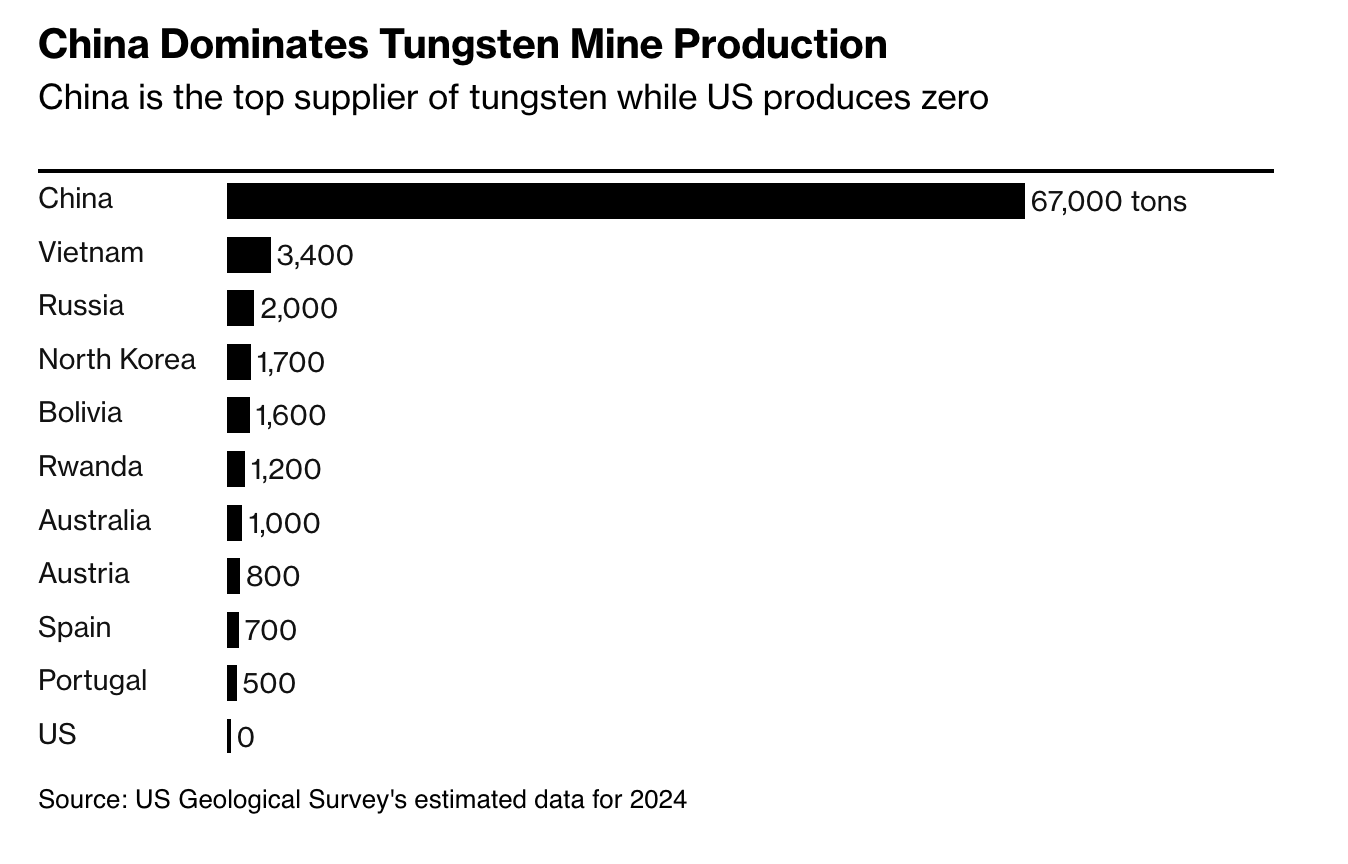
A Brazilian rare earths mine, Serra Verde, backed by American investors, highlights China's dominance in the critical minerals market. Opened last year, it's the only significant non-Asian source of some hard-to-find rare earths. Despite US government interest in funding its expansion amid trade tensions and China withholding strategic metals, Serra Verde is already contracted to sell nearly all its output to China until at least 2027. This is because China is essentially the only customer with the capacity to process the product, in effect controlling the market for these strategic minerals. The mine's CEO notes China's "prescient planning" and control over rare earth processing. While Brazil has abundant clay deposits rich in heavy rare earths, vital for magnets in electric vehicles, missiles, and drones, the West lacks the capacity to separate and process these elements. MP Materials, a US company partly funded by the Pentagon, also sells 80% of its light rare earth product to China. Serra Verde hopes to double the non-Asian supply of heavy rare earths by 2027, producing a few hundred tons, but until then, all production is committed to China.
Electric Cars
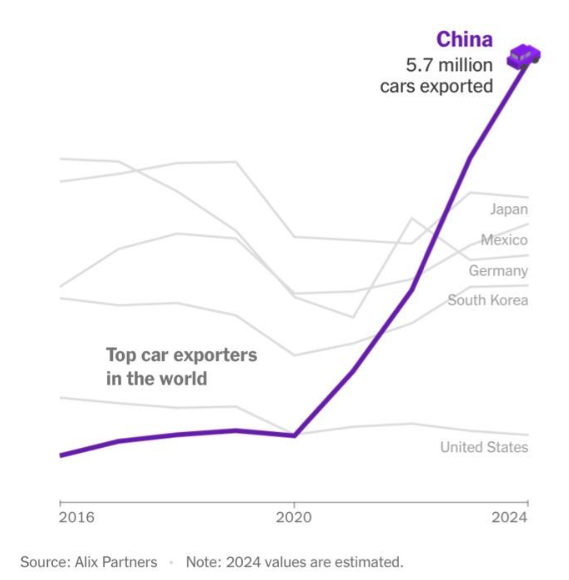
LANGFANG, China, July 11 (Reuters) - Electric-powered heavy trucks are rapidly gaining market share in China, driven by subsidies and the quick rollout of chargers, further curbing diesel usage and denting oil demand from the world's biggest crude importer.
The boom in electric truck sales in China follows that of electric cars and the rise in recent years of LNG-powered heavy trucks. Those factors, combined with slowing economic growth, have stifled its oil consumption growth.
Just a few years ago, very few people drove electric vehicles in Nepal. Today, however, the majority of vehicles in Nepal are electric, putting the country at the vanguard of the shift to battery-powered mobility. India's long-standing dominance of Nepal's auto market has evaporated as Chinese carmakers have overtaken Indian brands to become the largest sellers of cars in Nepal.
China is not just pushing sales of electric vehicles sharply higher. It is investing heavily in Nepal's electric public transport, particularly e-buses and charging stations. A slow rollout of charging stations hindered EV adoption in Nepal some years ago, but the number of charging stations is now growing rapidly along with demand for EVs.
Meanwhile India, despite sharing both a border with Nepal and a history of strong cultural, and political ties, has been left behind when it comes to EV sales in Nepal. Chinese brands like BYD, MG, and Xpeng are making big inroads into Nepal's auto market while Indian manufacturers struggle to maintain a foothold.
Luxury Food
Surpassed Australia to become the second-biggest producer of macadamia nuts (accounts for more than one-fifth of global macadamia production)
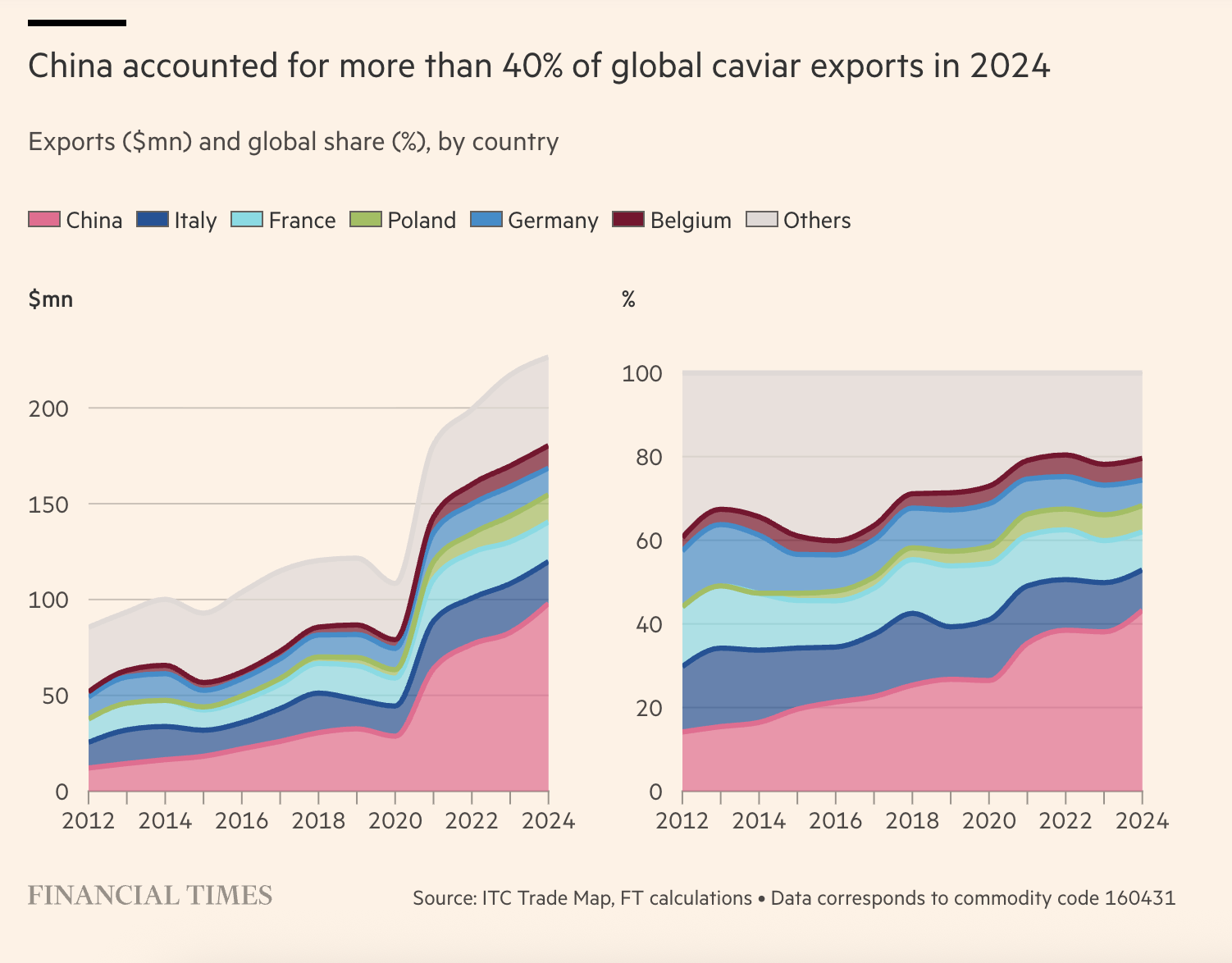
China is the world’s largest consumer of cherries and is projected to eat about 1.5mn tonnes this year, 900,000 tonnes grown domestically and the rest imported largely from Chile.
> Growing cherries in temperate Midu has required both private ingenuity and state-built infrastructure. To replicate the cold winters that enable the trees to enter dormancy, Maani transports them into industrial cold storage. The facilities, which house about 10,000 trees, are powered by cheap electricity from a nearby wind farm. Local authorities also built pipelines to supply water.
Synthetic Diamonds
Ships
One shipyard made more ships in 1 year than the US did post ww2 https://ustr.gov/sites/default/files/enforcement/301Investigations/USTRReportChinaTargetingMaritime.pdf
https://www.csis.org/analysis/ship-wars-confronting-chinas-dual-use-shipbuilding-empire
China’s shipbuilding rose from <5% of global tonnage (1999) to >50% (2023).
Chinese interests own ~19% of the world commercial fleet (Jan 2024).
China supplies ~95% of containers, ~86% of intermodal chassis, and ~70–80% of ship-to-shore cranes (≈80% of U.S. cranes).
https://www.uscc.gov/research/logink-risks-chinas-promotion-global-logistics-management-platform
Energy
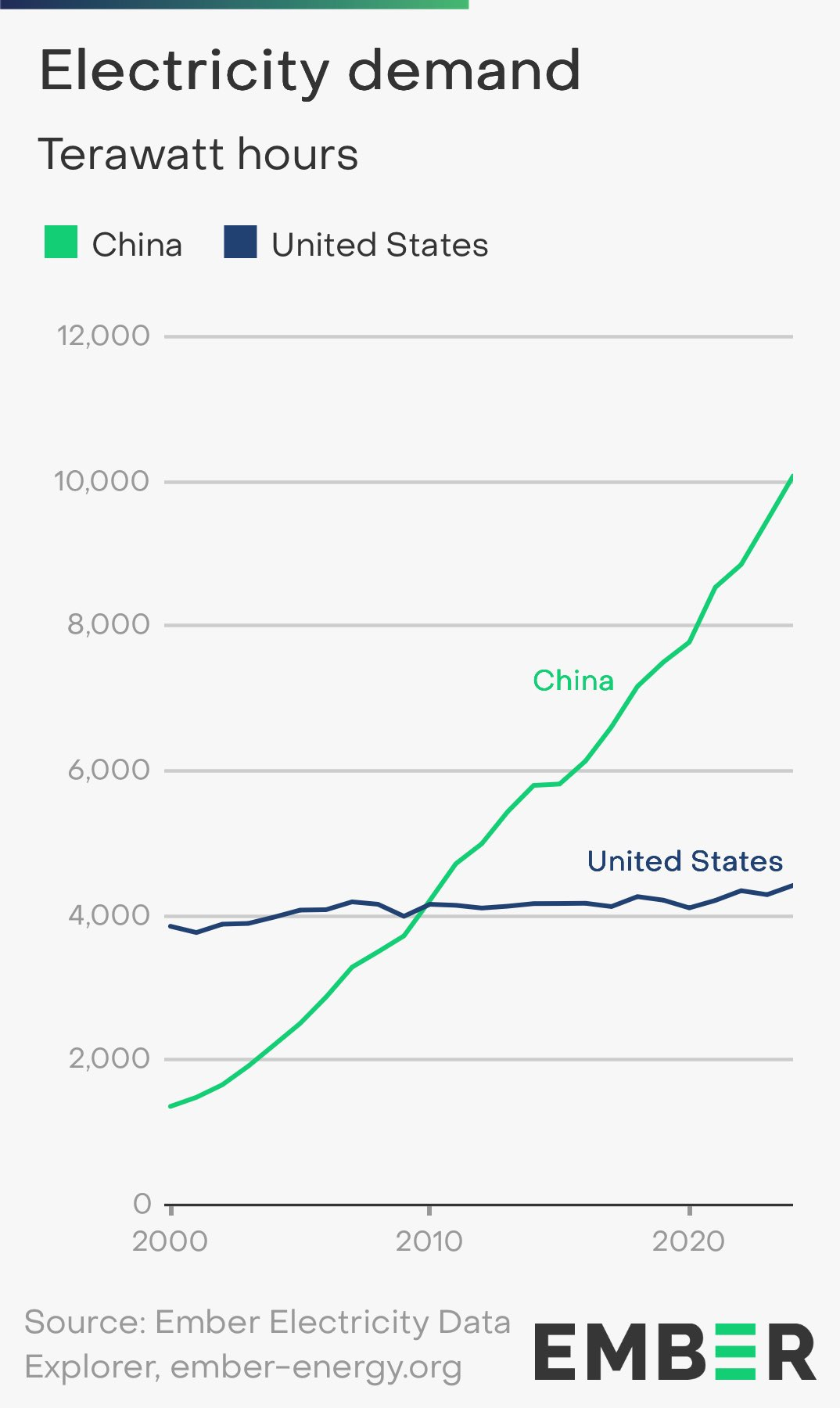
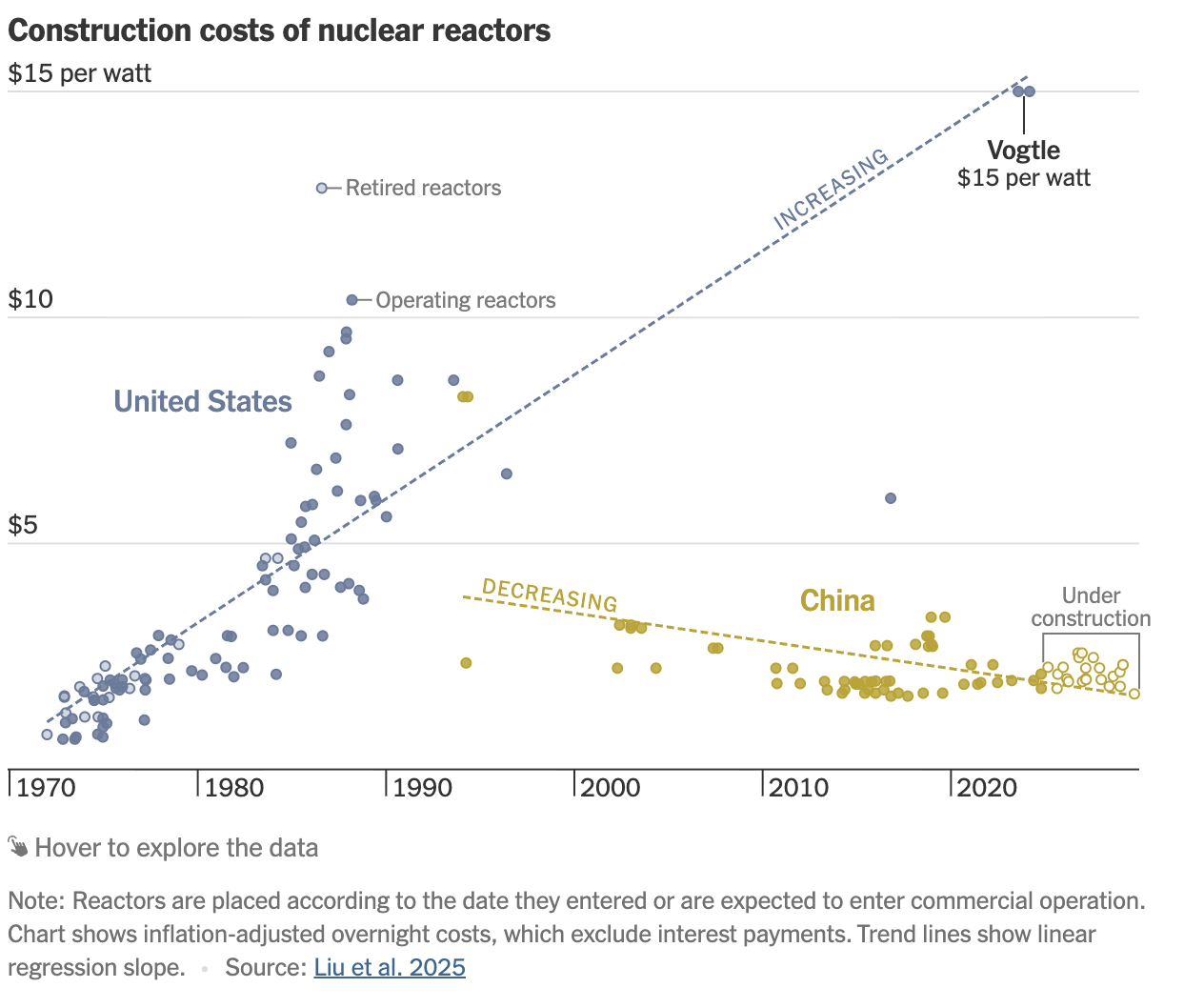
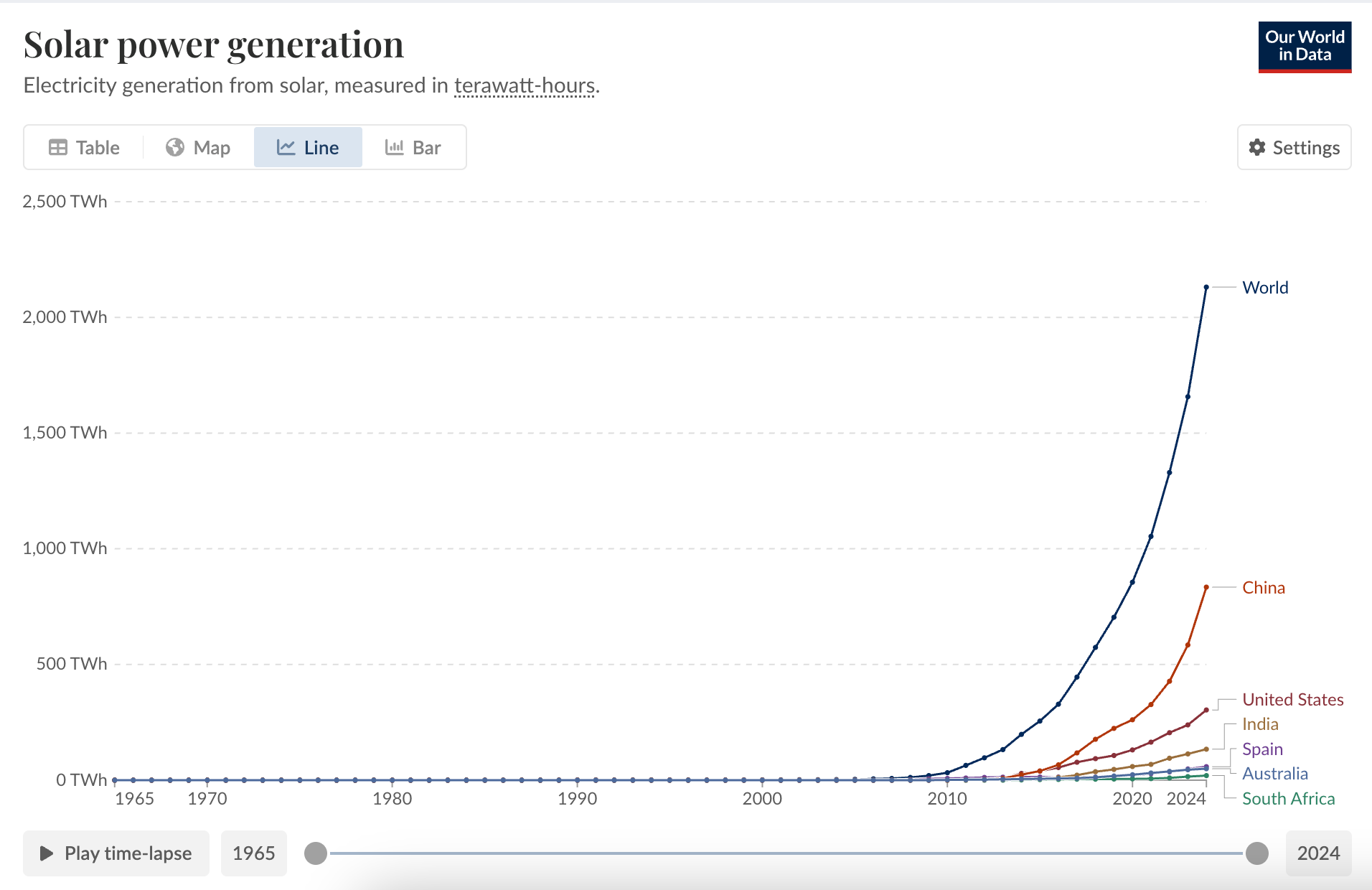
Complete Solar domination:
Airplanes
COMAC's coming. Maybe not this decade, but they are coming.
HANOI, March 13 (Reuters) - Vietnam's aviation regulator has proposed to recognise China's aircraft design certifications as equivalent to U.S. standards, facilitating the entry of jets from Chinese state-owned planemaker COMAC, according to documents seen by Reuters.
Biotech
Currently, China is the global leader in the production and export of APIs, which is around 20 percent of the world’s API production. The API industry in China plays an important role in the global pharmaceutical ecosystem. China produces and exports around 40% of APIs sent out to the world. In fact, some of the most important APIs such as paracetamol are imported from China. This is due to the low cost of utilities and greater government support.
Chinese co: Akeso Inc. is bringing a new treatment option for lung cancer to the US after a study showed its drug to be more effective than Merck & Co Inc.'s Keytruda. Keytruda generated almost $30 billion in revenue in 2024.
Europe’s last manufacturer of ingredients for some vital antibiotics is closing its biggest domestic factory and shifting some production to China, dealing a blow to Brussels’ efforts to reduce drug dependence on Asia. https://www.ft.com/content/4b9684e4-72da-49e9-b11b-abe8a20b9507
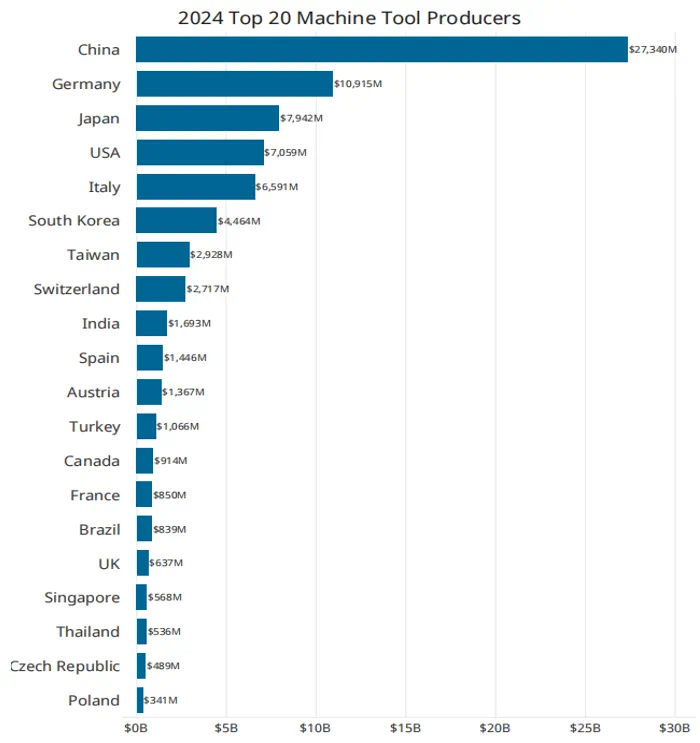
Machine Tools
There are some limiting factors to their growth however
Other countries really don’t like it when Chinese companies come into their markets and decimate their Champions
India x China x Russia alliance is very fragile